
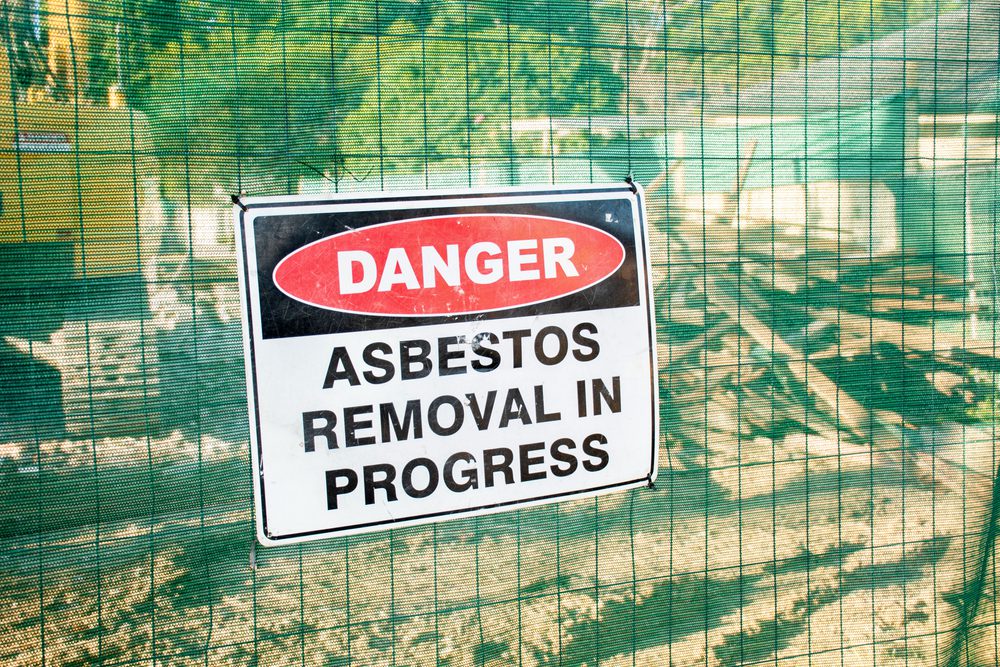
Asbestos awareness still matters in 2026. More than most people realise.
Asbestos was banned in the UK in 1999. More than two decades on, you would be forgiven for assuming the problem has gone with it.
It hasn’t.
Asbestos remains one of the leading causes of work-related deaths in the UK. The Health and Safety Executive estimates around 5,000 asbestos-related deaths in Great Britain every year, including mesothelioma, asbestos-related lung cancer, and asbestosis. The HSE has also estimated that around 20 tradespeople die every week from asbestos-related illnesses caused by past exposure on site.
Most of those exposures happened decades ago. The diseases take 20 to 50 years to develop. The deaths happening now are the consequence of work that was done in the 1970s, 80s, and 90s, often by people who had no idea what they were working with.
That latency is exactly why awareness still matters today. The decisions made on commercial refurbishment projects in 2026 will shape the health outcomes of the people on those sites well into the 2060s.
Why this still matters in 2026
The buildings haven’t gone anywhere
Asbestos was used extensively in UK construction for most of the 20th century. It is present in roofing, insulation, ceiling tiles, floor tiles, pipe lagging, partition boards, textured coatings, cement products, and dozens of other materials in buildings constructed or refurbished before 2000.
Most of those buildings are still standing. Many are now mid-cycle for refurbishment, fit-out, or repurposing. Schools, hospitals, retail premises, hotels, offices, and industrial units constructed before 2000 are all in scope.
On any commercial refurbishment project where the building pre-dates 2000, the question is not whether asbestos might be present. It is whether it has been properly identified, properly assessed, and properly managed before the work starts.
What good practice looks like
Five things every contractor should be doing
None of this is complicated. It is, however, non-negotiable.
Assume risk in older buildings
If the building was constructed or refurbished before 2000, treat asbestos as a possibility until proven otherwise. The default assumption is presence, not absence.
Check the asbestos survey before work starts
Under the Control of Asbestos Regulations 2012, the duty holder for a non-domestic building is required to identify and manage asbestos-containing materials. A current asbestos survey should be available, reviewed, and reflected in the project paperwork before any work begins on a pre-2000 building. If there isn’t one, ask why not.
Brief the team clearly
Every operative on site needs to know what is in the building, where it is, and what it looks like. Asbestos awareness training is the legal minimum for anyone who could come into contact with asbestos during their work. Refresher training is required annually.
Do not disturb suspect materials
If something looks suspect and isn’t on the survey, leave it alone. Cutting, drilling, sanding, or breaking unidentified materials is the single quickest way to release fibres into the air.
Stop work and report any concerns
If there’s any doubt about a material on site, stop the work in that area, isolate it, and escalate to site management. The cost of stopping for an hour is nothing compared with the cost of carrying on regardless.
What good practice looks like
Awareness, planning, and clear procedures
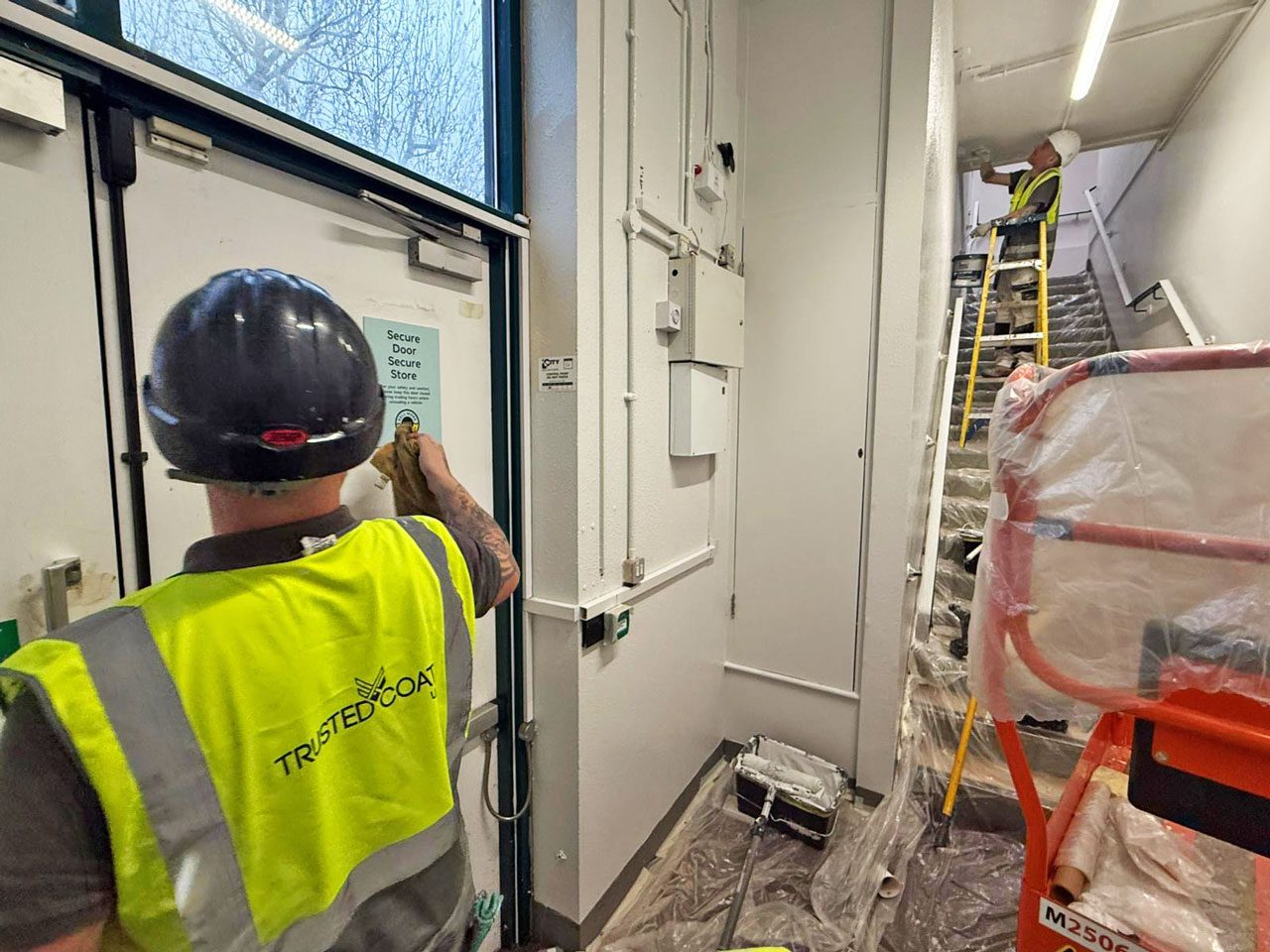
On every commercial refurbishment project we work on, asbestos awareness is part of the project setup, not an afterthought. Where buildings pre-date 2000, we expect to see a current asbestos survey before our teams start work, and we plan our sequence around what that survey shows.
Our operatives are trained to recognise asbestos-containing materials, to stop work if something suspect is uncovered, and to escalate to site management without delay. Site-specific risk assessments and method statements are agreed with site management before any work begins, with asbestos considerations factored in from the outset.
It isn’t a separate workflow. It is part of how we run every commercial project.
Got a commercial refurbishment coming up?
If you are scoping a refurbishment or fit-out project in 2026 and want a coatings contractor that takes site safety seriously from day one, get in touch.